Flipped Classroom Guide: 5 Powerful Ways to Transform Learning
You know the feeling. It’s 2:00 PM on a Tuesday. You are standing at the front of the room, twenty minutes into a lecture you spent hours preparing. You look out at the sea of faces and see… nothing. No sparks of insight, no burning questions. Just the “graveyard shift” stare. This is exactly why the flipped classroom model is revolutionizing education.
Fast forward to that evening. Your student, let’s call him Alex, is sitting at his kitchen table. He’s staring at a math worksheet, frustration welling up. He vaguely remembers you talking about this concept, but now that he has to apply it, he’s lost.
This broken loop is the reality for millions. We spend precious face-to-face time on passive information transfer and leave the hard work for when students are alone.
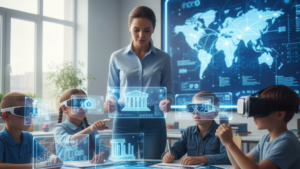
But what if you reversed that dynamic? By adopting a flipped classroom approach, you can fundamentally restructure how you value time in education. This method moves the “easy” part (listening) to the home and the “hard” part (active problem solving) to the school, transforming you from a content broadcaster to a learning architect.

Table of Contents
What Is a Flipped Classroom?
At its core, the flipped classroom is a pedagogical approach where direct instruction moves from the group learning space to the individual learning space.
Think of it as reversing the flow. In a traditional setting, you introduce new content in class, and students practice at home. In a flipped classroom, your students encounter the new material before they walk through the door—usually via video lectures, reading assignments, or curated podcasts.
This shift liberates class time. You are no longer the “Sage on the Stage.” You become the “Guide on the Side,” facilitating deeper discussions. According to the Flipped Learning Network, this method relies on four pillars (F-L-I-P): Flexible Environment, Learning Culture, Intentional Content, and Professional Educator.
3 Major Benefits of a Flipped Classroom
You might be thinking, “Is this worth the effort?” The data suggests a resounding yes. Here is why the flipped classroom benefits both you and your students.
1. Students Control the Pace
The biggest win in a flipped classroom is pace control. In a live lecture, if a student zones out for thirty seconds, they miss a crucial step. With pre-recorded content, they can pause, rewind, and re-watch.
2. Active Engagement
When students tackle cognitive tasks in the flipped classroom, they have immediate access to your expertise. They aren’t struggling alone. This shifts the focus from passive listening to active doing.
3. Teacher Differentiation
For you, the flipped classroom offers the holy grail of teaching: differentiation. You are free to walk the room, spending time with groups that are stuck while checking in on those flying through the material.
![Image: A teacher leaning over a desk helping a small group of students collaborate on a project]
5 Steps to Implement a Flipped Classroom Strategy
Starting a flipped classroom can feel overwhelming. You don’t need to record 180 videos overnight. Here is a sustainable, 5-step roadmap.
Step 1: Start with a Pilot
Pick just one lesson. Choose a topic where students historically struggle with homework. This is where your flipped classroom strategy will have the highest impact.
Step 2: Curate Before You Create
You do not need to be a YouTuber. Platforms like Khan Academy and TED-Ed have high-quality content. Watch them. If they align with your standards, use them to save time.
Step 3: Keep Content Short
When you create your own flipped classroom videos, keep them brief. The rule of thumb is 1 to 1.5 minutes of video per grade level. A 10th grader should not watch a video longer than 15 minutes.
Step 4: Add Interactivity
Passive watching is the enemy. Use tools like EdPuzzle to embed questions directly into your flipped classroom videos. This ensures students are actually engaging with the content, not just hitting “play” and walking away.
Step 5: Redesign Class Time
If you have students watch a lecture at home and then come to class to sit in silence, you have missed the point. You need blended learning strategies. Plan labs, debates, or collaborative tasks.
Overcoming Common Flipped Classroom Challenges
Let’s be real. Implementing a flipped classroom has hurdles. Here is how you handle them.
The Digital Divide Not every student has high-speed internet.
- The Fix: Offer offline solutions. Load flipped classroom videos onto USB drives or allow students to download content while on school Wi-Fi.
Student Resistance Some students will come unprepared.
- The Fix: Have a “tech corner.” Students who didn’t watch the video must watch it there while the rest of the class does the fun activity. They will quickly realize the value of the flipped classroom model.
Real-World Flipped Classroom Success Stories
Take the famous case of Clintondale High School. As a failing school, the principal decided to utilize the flipped classroom for the entire curriculum.
The results were staggering. The failure rate in English dropped from 52% to 19%. Discipline issues decreased because students were busy engaging with the material rather than being bored by lectures.
![Image: Graph showing the decline in failure rates at Clintondale High School after implementing flipped learning]
Flipped Classroom FAQ
Does the flipped classroom replace the teacher? No. It makes you more essential. A video can deliver facts, but it can’t offer personalized coaching like you can in a flipped classroom.
Is a flipped classroom just for Math? No. It is powerful in Humanities. In English, students can read texts at home, leaving flipped classroom time for deep thematic debates.
How much work is required? Front-loading content takes time. However, unlike a live lecture, a flipped classroom video is an asset you can reuse for years.
Conclusion: The Future is Active
The traditional “sit and get” model was designed for the industrial revolution. The flipped classroom gives you the one thing you have always wanted more of: time.
Time to help the struggling student. Time to challenge the bored student. Time to make learning human again.
So, here is your challenge. Next week, pick one lesson. Find a 5-minute video. Assign it. Then, turn your class into a workspace. You might just find that by turning your teaching upside down with a flipped classroom, you finally set it right side up.