Practical Guide to Developing Your Soft Skills in 2026
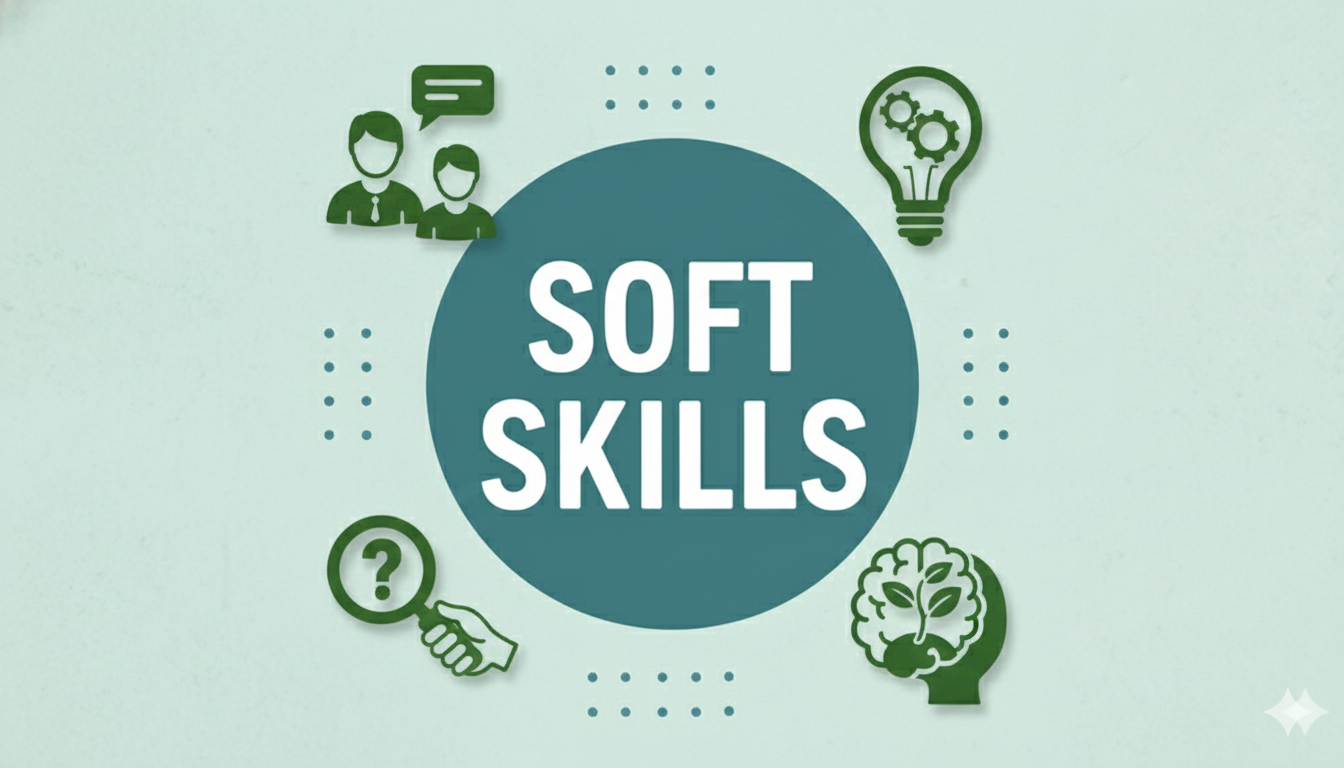
As we move toward 2026, the professional landscape is undergoing a seismic shift. The rapid integration of Artificial Intelligence (AI) and the permanent establishment of remote and hybrid work models have changed what employers value most. While technical skills (hard skills) remain necessary, they are increasingly perishable. The true currency of the future workplace is soft skills the uniquely human capabilities that machines cannot replicate.
This guide details the essential soft skills for 2026 and provides practical, daily methods to develop them.
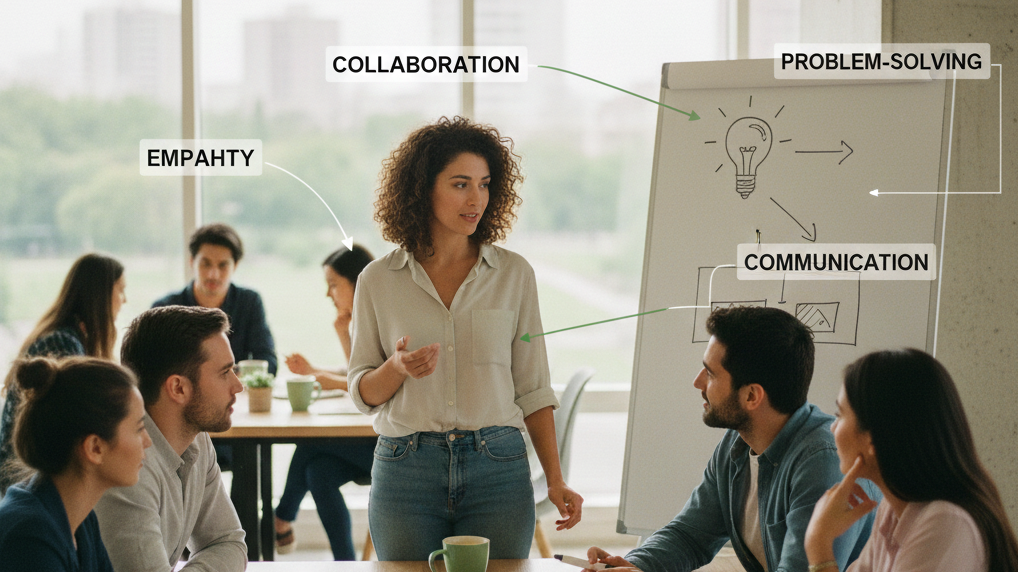
Table of Contents
1. Emotional Intelligence (EQ): The New Leadership Standard
In an era where AI handles data processing and logic, the ability to connect, empathize, and lead with emotional nuance is premium. High EQ allows you to navigate office politics, lead diverse teams, and manage stress in high-pressure environments.
Why It Matters in 2026
- Trust Building: In virtual teams, trust is harder to build. High EQ helps bridge the “digital distance.”
- AI Management: As AI takes over routine tasks, humans are left with the “messy” work—managing people, conflicts, and ethical dilemmas.
How to Develop It
- The “Emotion Labeling” Technique:
- Practice: Stop three times a day to specifically name your emotion. Don’t just say “bad”; say “frustrated,” “anxious,” or “disappointed.” Research shows that granularly naming an emotion reduces its hold on your nervous system.
- The “3-Second Pause”:
- Practice: When triggered by a Slack message or email, force a 3-second physical pause before typing. Use this moment to ask: Is my reaction about facts or my feelings?
- Active Empathy Audits:
- Practice: In your next meeting, focus entirely on the speaker’s body language and tone rather than their words. After the meeting, write down what you think they were feeling, not just what they said.
2. Radical Adaptability & Resilience
The pace of change in 2026 is blistering. “Adaptability Quotient” (AQ) is now as important as IQ. It is the ability to unlearn old methods and embrace new ones without losing your composure.[5]
Why It Matters in 2026
- Tool Turnover: The software you use today might be obsolete in six months.
- Role Fluidity: Job descriptions are becoming suggestions rather than rigid boxes. You will likely wear multiple hats.
How to Develop It
- Micro-Challenges (Resilience Sprints):
- Practice: Intentionally disrupt your routine once a week. Take a different route to work, use a new software tool for a familiar task, or work from a different room. This trains your brain to be comfortable with discomfort.
- The “Yet” Mindset:
- Practice: Catch yourself saying “I can’t do this.” Immediately append the word “yet.” “I can’t use this new AI tool… yet.” This simple linguistic shift rewires your brain for growth.
- Post-Mortem Your Failures:
- Practice: When something goes wrong, treat it as data. instead of self-criticism, ask: What variable caused this result? What is one specific thing I can change next time?
3. Critical Thinking in the Age of AI
With Generative AI producing content at scale, the ability to discern truth, bias, and quality is vital. You are no longer just a creator; you are an editor and an auditor.
Why It Matters in 2026
- Hallucination Check: AI still makes confident errors. Your value lies in catching them.
- Strategic Insight: AI can give you answers, but only humans can ask the right questions.
How to Develop It
- The “AI Audit”:
- Practice: When using ChatGPT or Gemini, never copy-paste blindly. Challenge the output. Ask the AI: “What are the potential biases in this answer?” or “What counter-argument would a critic make to this?”
- First-Principles Thinking:
- Practice: When solved a problem, strip it down to the absolute basic truths (facts that cannot be argued). Build your solution up from there, rather than relying on “how we’ve always done it.”
- Socratic Questioning:
- Practice: In discussions, ask “Why?” five times to get to the root cause of an issue. (e.g., “The project is late.” Why? “We waited for approval.” Why? “The manager was overloaded.” Why?…)
4. Digital Communication & Virtual Presence
Communicating clearly across time zones, cultures, and screens is a distinct skill set. In 2026, “digital charisma” is real.
Why It Matters in 2026
- Async Work: Much of your work will happen in writing (Slack, Teams, Docs) while you sleep. Clarity prevents bottlenecks.
- Video Fatigue: Being the person who runs efficient, engaging meetings makes you indispensable.
How to Develop It
- The “BLUF” Method (Bottom Line Up Front):
- Practice: In every email or message, put the “ask” or the “conclusion” in the very first sentence. Provide context afterwards. This respects the recipient’s time.
- Video Review:
- Practice: Record yourself presenting or speaking in a low-stakes meeting. Watch it back with the sound off. do you look engaged? Do you look bored? Your non-verbal cues on camera speak louder than your words.
- The “No-Context” Rule:
- Practice: Before hitting send on a message, read it as if you were a stranger with zero context. Is it still clear? If not, rewrite it.
5. Recommended Tools & Resources for 2026
You don’t have to do this alone. Use technology to build your human skills.
- For Emotional Intelligence:
- App: How We Feel (Great for tracking emotional patterns and expanding your vocabulary).
- App: MoodMeter (Built by Yale researchers to help you plot energy vs. pleasantness).
- For Communication:
- Tool: VirtualSpeech (Uses VR to practice public speaking and difficult conversations with avatars).
- Tool: Grammarly (Use its “tone detector” not just for grammar, but to see if you sound confident, friendly, or aggressive).
- For Focus & Critical Thinking:
- App: Headspace or Calm (Meditation is the gym for your focus muscles).
- Method: Mind Mapping (Tools like Miro or Lucidchart help visualize complex problems).
Conclusion
In 2026, the most successful professionals will not be the ones who compete with machines, but the ones who complement them.By investing in your emotional intelligence, adaptability, and critical thinking today, you are future-proofing your career against automation. Start small—pick one exercise from this guide and practice it for a week. Your future self will thank you.