Top Student Tips for Studying Effectively: The Complete Guide to Boost Your Learning and Academic Success in 2026
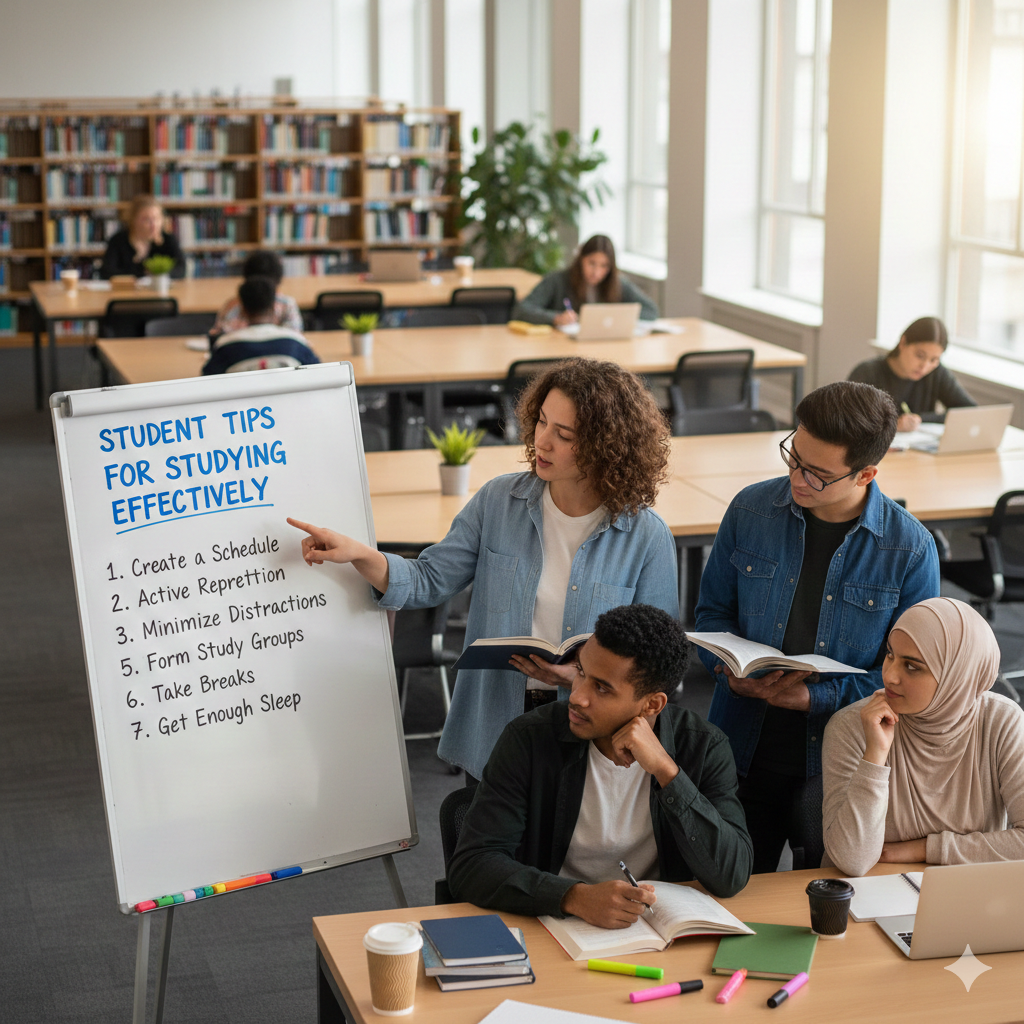
In today’s fast-paced education landscape, studying effectively is not just about spending long hours with books. It’s about using smart, science-backed strategies that improve focus, retention, and productivity. Whether you’re in high school, university, or enrolled in online courses, mastering the right learning techniques can significantly improve your grades and confidence.
In this complete guide, you will discover the most effective study tips, backed by cognitive science and widely recommended by educators worldwide. These strategies are simple to apply, highly practical, and designed for long-term academic success.

Table of Contents
What Does “Studying Effectively” Really Mean?
Effective studying isn’t about memorizing everything or working until exhaustion. It means:
- Understanding concepts deeply
- Retaining information for the long term
- Staying consistent without burnout
- Using tools and methods that maximize your productivity
Students who study effectively perform better not because they work harder—but because they work smarter.
1. Use Active Recall: The No. 1 Technique for Better Memory
Active recall means testing yourself instead of passively reading. This method improves long-term retention and is one of the most powerful study techniques.
How to practice active recall
- Close your notes and explain the concept out loud
- Use flashcards (Anki, Quizlet)
- Try answering past exam questions
- Sketch diagrams or mind maps from memory
This technique forces your brain to retrieve information, strengthening neural pathways and making you remember faster and longer.
2. Apply Spaced Repetition for Long-Term Learning
Spaced repetition helps you remember information more easily by reviewing it at the right intervals.
Recommended review schedule
- Day 1: Learn
- Day 3: Review
- Day 7: Review again
- Week 2
- Week 4
- Month 2
This method is perfect for vocabulary, formulas, definitions, and course summaries.
3. The Pomodoro Technique: Study in Focused Blocks
Instead of studying for hours without breaks, divide your time into short, focused sessions.
Standard cycles
- 25–40 minutes of focused study
- 5–10 minutes break
After 4 cycles, take a longer break (15–20 minutes).
This technique improves focus, reduces stress, and boosts motivation.
4. Take Efficient Notes Using Your Own Words
Good note-taking is key to effective studying. Don’t copy long paragraphs—reformulate concepts.
Best note-taking methods
- Cornell Method
- Mind maps
- Bullet points
- Question-and-Answer format
Your brain learns better when you process information instead of simply writing it down.
5. Teach What You Learn to Strengthen Your Understanding
One of the most powerful study hacks is to teach the material to someone else. If you can explain a topic clearly and simply, you truly understand it.
Ways to apply this method
- Teach a friend or classmate
- Record yourself explaining a lesson
- Pretend to teach an imaginary class
This technique reveals knowledge gaps and improves critical thinking.
6. Use the 80/20 Rule to Study Smarter
According to the Pareto Principle, 20% of your effort produces 80% of your results.
How to apply it to studying
- Identify the most important chapters
- Focus on what is most likely to appear in the exam
- Prioritize your weaknesses instead of rereading what you already know
This strategy saves time and improves efficiency.
7. Create a Distraction-Free Study Environment
A clean and organized workspace improves concentration.
Tips for staying focused
- Put your phone in another room
- Block distracting apps (Forest, Cold Turkey)
- Use noise-free headphones or ambient music
- Study in a quiet area like a library or home desk
Your environment has a huge impact on your productivity.
8. Mix Subjects to Improve Memory (Interleaving Method)
Studying the same subject for long hours leads to fatigue. Instead, alternate topics.
Example session
- 30 min Math
- 30 min Biology
- 30 min English
- Repeat
Interleaving boosts problem-solving skills and improves long-term retention.
9. Practice with Real Exam Conditions
To reduce stress and improve performance, simulate the test environment.
How to do it
- Set a timer
- No notes
- Sit at a desk
- Work in complete silence
This technique enhances confidence, speed, and accuracy.
10. Prioritize Your Health: Sleep, Nutrition, and Movement
Your brain performs better when your body is healthy.
Non-negotiables for students
- Sleep 7–9 hours
- Drink plenty of water
- Eat brain-boosting foods (nuts, fruits, omega-3)
- Move your body: short walks, stretching, or light exercise
Healthy habits directly impact memory and concentration.
Bonus: Digital Tools to Improve Your Studying
Here are some popular study apps:
- Notion – for organizing courses
- Anki / Quizlet – for flashcards
- Forest – to avoid phone distraction
- Google Calendar – to schedule revision sessions
- Grammarly – to improve your writing
Technology can support your learning if you use it wisely.
Conclusion: Studying Effectively Is a Skill You Can Learn
Effective studying isn’t about luck or natural talent—it’s about strategy. By applying these proven techniques—active recall, spaced repetition, structured sessions, healthy habits, and smart planning—you’ll study less while achieving better results.
With consistency and the right tools, any student can significantly improve their academic success.