Duolingo Review 2026: 7 Reasons This App Is Insanely Effective
It starts with a simple notification on your phone. You feel a vibration in your pocket, pull out your device, and there he is: a small, bright green owl staring back at you. He is reminding you, perhaps with a hint of passive-aggression, that it is time for your daily Spanish lesson. You might swipe it away, thinking you will get to it later. But an hour passes, and the notification returns—this time, the owl looks slightly sadder. Before you know it, you are hiding in the bathroom during a dinner party, frantically tapping your screen to translate “The cat drinks milk” just to save your 400-day streak.
Duolingo has become more than just an app; for millions of people around the globe, it is a daily ritual of self-improvement. But looking past the memes of the “murderous owl” and the colorful animations, a serious question remains for the dedicated learner: Does this gamified platform actually teach you a language? Or are you just getting really good at playing a video game that looks like education?
Whether you are a student eyeing the Duolingo English Test for university admission, a traveler wanting to order a croissant in Paris without getting a dirty look, or just someone trying to keep their brain sharp, you need the honest truth. In this comprehensive guide, we will dive deep into the mechanics, the science, and the effectiveness of the education giant that changed how the world learns.
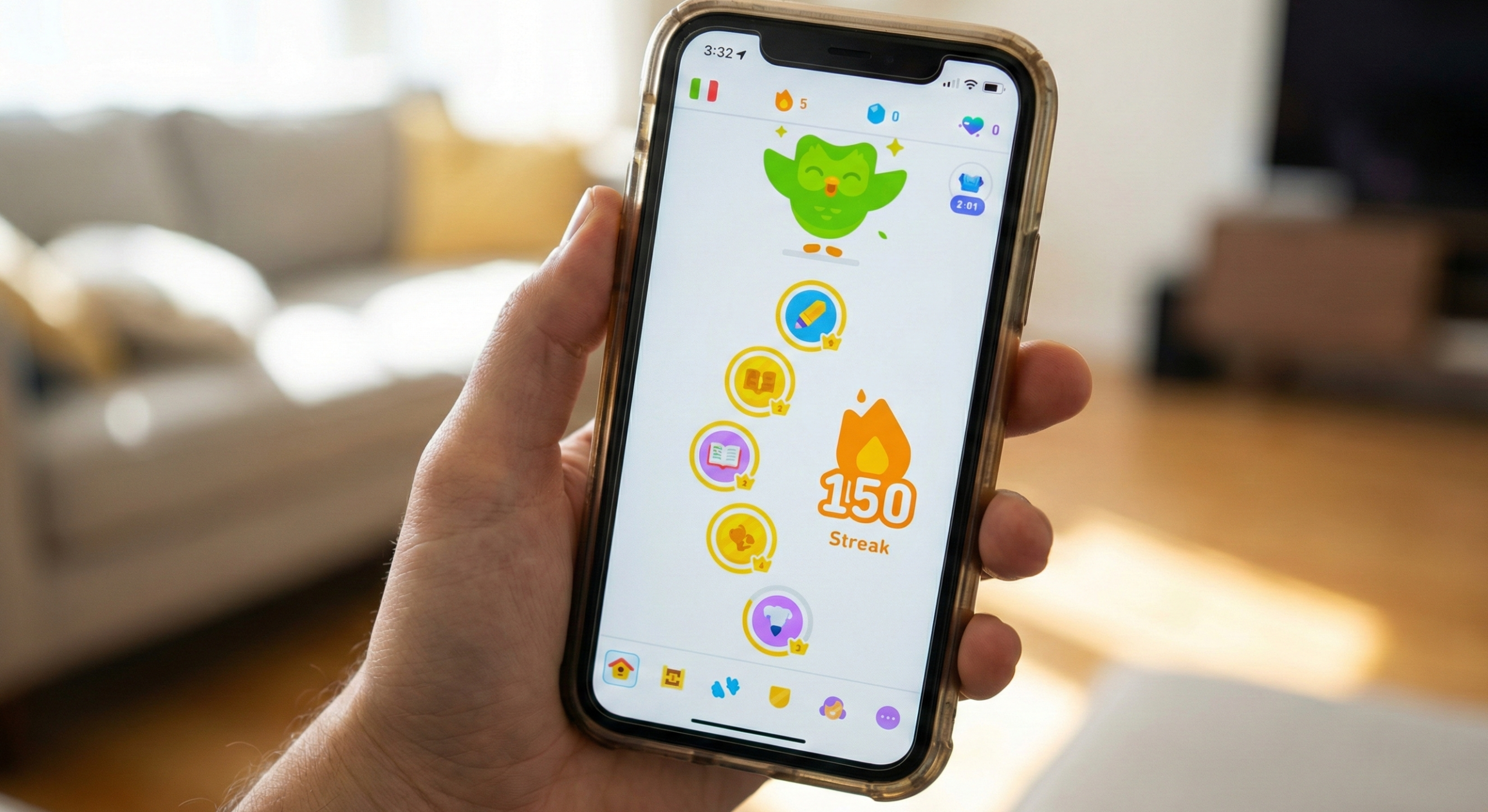
1. What Is Duolingo? The “Free Education” Revolution
If you haven’t opened the app in a few years, you might be shocked by what you find today. Duolingo launched back in 2011 with a mission that sounded almost too good to be true in a world of expensive textbooks and tuition fees: free language education for everyone.
The platform was co-founded by Luis von Ahn, the genius computer scientist who also invented CAPTCHA (those squiggly letters you type to prove you aren’t a robot). His vision was simple but revolutionary. He wanted to harness the massive amount of time people spend online and turn it into something productive.
The Evolution of the Owl
Today, Duolingo is no longer just a language tool; it is a “Super App” for general education. While it is famous for teaching Spanish, French, Japanese, and even fictional languages like High Valyrian from Game of Thrones, the platform has aggressively expanded its curriculum to cover other essential skills.
- Duolingo Math: This feature isn’t just for children. It offers brain training for adults, focusing on mental math and practical geometry. It is designed to help you calculate tips, convert measurements, or bake a cake without needing a calculator.
- Duolingo Music: Using an on-screen piano interface, you learn to read notes and play familiar tunes. It uses the same “gamified” logic—short, bite-sized lessons—to teach musical literacy to total beginners.
With over 120 million monthly active users as of late 2024, the platform has proven that its formula works. It takes the “scary” out of learning difficult subjects. You aren’t sitting in a dusty classroom staring at a chalkboard; you are swiping, tapping, and matching pairs on your morning commute.
2. How Duolingo Works: The “Sticky” Science of Gamification
You might wonder why you find yourself opening Duolingo when you should be working or sleeping. That isn’t an accident. The app is engineered by some of the smartest psychometricians, data scientists, and designers in the world to be “sticky.” It borrows heavily from the world of mobile gaming (like Candy Crush) to keep you coming back day after day.
Here is a breakdown of the specific mechanics that hook your brain:
The Power of the Streak
This is widely considered the most powerful tool in their arsenal. The “Streak” is a counter of how many consecutive days you have completed a lesson. It sounds silly, but once you hit a 50-day or 100-day streak, the psychological pressure to keep it going is immense. Losing your streak feels like losing a piece of your identity. It forces you to build a daily habit, which is the hardest part of learning anything.
Leagues and Leaderboards
If you have a competitive bone in your body, the Leagues will get you. You are placed in a group of 30 random users every week. The more lessons you do, the more XP (Experience Points) you earn. If you finish in the top 10, you get promoted to the next league, climbing from Bronze all the way to the coveted Diamond League.
But be warned: the competition in the Diamond League is fierce. You will see users racking up thousands of points in minutes. It turns language learning into a race, which can be motivating for some and exhausting for others.
The Hearts System
In the free version of the app, you play with “Hearts.” You usually have five. Every time you make a mistake, you lose a heart. If you lose them all, you’re locked out of learning until they regenerate (which takes hours) or until you practice old material to earn them back. This adds a layer of stakes to your lessons. You want to get the answer right to stay in the game.
The Linear Path
Gone is the old “tree” where you could bounce around different topics freely. The modern Duolingo interface is a single, linear path. It guides you step-by-step through the curriculum. While some long-time users miss the freedom of the old design, the new path is better at spaced repetition—bringing back old words just as you are about to forget them.
3. The Science Behind Duolingo: Does It Actually Work?
This is the question everyone asks. Can you actually become fluent just by using an app? The short answer is: No, not by the app alone. The long answer, however, is much more nuanced and positive.
Duolingo is incredibly effective at specific aspects of language acquisition. If your goal is to build a robust vocabulary, understand sentence structure, and get comfortable reading a new language, this app is a goldmine.
Reading and Listening Proficiency
Studies commissioned by the company have shown that completing five units of French or Spanish covers as much reading and listening material as four university semesters. The app aligns its courses with the CEFR (Common European Framework of Reference for Languages), aiming to get learners to a B2 level in popular courses.
The “Fluency Fallacy”
However, “fluency” implies the ability to speak spontaneously in real-time. This is where the app struggles. You might be able to translate “The boy eats the red apple” perfectly, but if someone in Madrid asks you for directions to the train station, you might freeze. The app focuses heavily on translation (A to B) rather than conversation (A to Idea to B).
Think of Duolingo as the vitamins in your diet. Vitamins are essential, but you cannot survive on them alone; you need a full meal. To truly learn a language, you must pair the app with:
- Watching movies or TV shows in the target language.
- Speaking with real people (using language exchange apps or tutors).
- Reading books or news articles.
If you use the app as your foundation and build upon it, it works wonders. If you use it as your only source of learning, you will become very good at playing Duolingo, but not necessarily good at speaking the language.
4. The Duolingo English Test (DET): A Game Changer for Students
While most of us know the app for casual learning, there is a side of the company that is serious business: The Duolingo English Test (DET). If you are an international student planning to study abroad, this might be the most important section for you.
For decades, if you wanted to prove your English proficiency, you had to take the TOEFL or IELTS. These exams are expensive, long, and often require traveling to a specific testing center that might be hundreds of miles away. Duolingo disrupted this market completely.
Why Choose the DET?
- Unmatched Convenience: You can take the test from your bedroom. You don’t need to book a slot months in advance or travel to a major city. You just need a computer, a webcam, and a quiet room.
- Affordable Cost: It costs roughly $60 USD. Compare that to the $200+ price tag of its competitors, and it’s a no-brainer for students on a budget.
- Lightning Speed: You get your results in 48 hours (often sooner). Traditional tests can take weeks to return scores.
- Global Acceptance: This is no longer a niche test. It is accepted by over 5,000 programs worldwide, including prestigious institutions like Yale, Columbia, and Duke in the USA, as well as top universities in Canada and the UK.
Adaptive Testing Technology
The test uses Computer Adaptive Testing (CAT). This means the test adapts to your skill level in real-time. If you answer a question correctly, the next one gets harder. If you mess up, it gets easier. This allows the test to pinpoint your exact proficiency level in under an hour, rather than the three or four hours required by traditional exams.
5. Free vs. Super Duolingo vs. Duolingo Max
So, do you need to pay? The app is famous for being “free forever,” but they really want you to subscribe. Let’s break down the tiers so you can decide if your wallet needs to be involved.
The Free Version
- Cost: $0.
- Experience: You get access to every single language course. Nothing is paywalled in terms of educational content. However, you have to deal with ads after every lesson, and you are limited by the Heart system. If you run out of hearts, you stop learning.
- Verdict: Good for casual learners who do 5-10 minutes a day.
Super Duolingo (Formerly Plus)
- Cost: Roughly $7 to $13 per month (depending on the plan/family pack).
- Experience: No ads. Unlimited Hearts. This is the biggest selling point—you can make as many mistakes as you want without being punished. You also get a “Practice Hub” to review your specific mistakes.
- Verdict: Essential for “binge learners” who want to study for an hour at a time without interruptions.
Duolingo Max (The AI Tier)
- Cost: Roughly $14 to $30 per month.
- Experience: This is the newest, fanciest tier powered by GPT-4. It includes everything in Super, plus two massive features:
- Roleplay: You can have dynamic, text-based conversations with AI characters (like ordering coffee from a barista or discussing travel plans). It helps bridge that “speaking gap” we mentioned earlier.
- Explain My Answer: When you make a mistake, you can tap a button to get a detailed explanation of why you were wrong. The free version just tells you the right answer; Max teaches you the grammar rule behind it.
- Verdict: Worth it if you are serious about grammar and want near-native conversation practice without hiring a human tutor.
6. Duolingo vs. The Competitors: How Does It Stack Up?
It is important to know that Duolingo isn’t the only player in town. How does it compare to the other titans of language learning?
Duolingo vs. Babbel
Babbel is less “gamey” and more academic. It focuses on conversation and grammar rules from day one.
- Winner: Babbel is better for serious learners wanting to speak quickly; Duolingo is better for engagement and habit-building.
Duolingo vs. Rosetta Stone
Rosetta Stone uses “immersion,” meaning they never use your native language to explain things. They show you a picture of a ball and say “La balle.”
- Winner: Duolingo is generally faster and more modern. Rosetta Stone can feel a bit dated and slow-paced for the TikTok generation.
Duolingo vs. Memrise
Memrise uses spaced repetition with flashcards and features videos of locals speaking.
- Winner: Tie. Memrise is great for learning slang and casual speech, while Duolingo provides a better structured path.
7. Pros and Cons of Duolingo
Before you commit your time to the owl, let’s summarize the good, the bad, and the ugly.
The Pros
- Accessibility: It lowers the barrier to entry. Anyone can start learning immediately without spending a dime.
- Variety: Whether you want to learn Spanish for a vacation or clean up on your math skills, it’s all there.
- Motivation: The gamification works. It keeps you coming back on days when you would otherwise quit.
- Visual Learning: The interface is clean, snappy, and intuitive, making it great for visual learners.
The Cons
- Weird Sentences: You will undoubtedly encounter sentences like “The spider eats bread” or “My horse is an architect.” While funny, they aren’t always useful for tourists.
- Implicit Grammar: The app doesn’t always explain the rules explicitly. You are expected to figure out the patterns by repetition, which can be frustrating for analytical learners who just want to see a conjugation table.
- Speech Recognition: It can be hit or miss. Sometimes it accepts a mumbled answer; other times it rejects a perfect pronunciation.
8. Tips to Master Duolingo (and Hack Your Learning)
If you want to get the most out of the app, don’t just passively click buttons. Use these strategies:
- Use the Desktop Version: The web version of Duolingo often allows you to type out answers rather than just selecting word bubbles. This forces your brain to recall the spelling, which leads to better retention.
- Speak Everything Out Loud: Don’t just read in your head. Every time the app speaks a sentence, repeat it out loud. Mimic the intonation. This turns a reading exercise into a speaking exercise.
- Engage with the Stories: The “Stories” tab (the little book icon) offers short narratives. These are excellent for context and listening comprehension.
- Don’t Obsess Over Leagues: It is easy to get caught up in the XP race. Remember, spamming easy lessons just to get points won’t teach you anything new. Focus on progress, not points.
9. FAQ Section
Here are some of the most common questions users ask about the platform.
Can you really become fluent with [Duolingo]?
No, not if you use it in isolation. Duolingo is a fantastic tool to get you to an A2 or B1 level (intermediate) in reading and listening. To achieve true fluency, you need to supplement the app with speaking practice, real-world conversations, and media consumption in that language.
Is the [Duolingo] app really free?
Yes. Unlike many competitors that lock advanced levels behind a paywall, Duolingo offers its entire course content for free. You only pay to remove ads and gain convenience features like unlimited hearts.
Is the [Duolingo] English Test accepted for visas?
This depends heavily on the country. For student visas (like in the US or UK), many universities accept the DET as proof of English ability for admission, which supports your visa application. However, for direct immigration or work visas, governments often have specific lists of approved tests. Always check the official immigration website of your target country.
What happens if I lose my [Duolingo] streak?
It sounds dramatic, but it happens. If you miss a day, your streak counter resets to zero. However, you can equip a “Streak Freeze” in advance using gems, which protects your streak for one missed day. If you lose it and didn’t have a freeze, the app sometimes offers to repair it for a fee or if you subscribe to Super Duolingo.
Which language is the easiest to learn on [Duolingo]?
For English speakers, languages like Spanish, French, and Norwegian are generally considered the easiest because they share many roots or grammatical structures with English. The app’s courses for Spanish and French are also the most developed, with more stories and podcasts available.
Conclusion: Should You Download the Owl?
At the end of the day, the best language learning tool is the one you actually use. You could buy a $300 textbook or sign up for an expensive in-person class, but if you never show up, you won’t learn a thing.
Duolingo succeeds because it meets you where you are: on your phone, on your couch, in those five spare minutes between meetings. It turns a daunting mountain of education into a series of climbable hills. It might not make you a native speaker overnight, but it will ensure you are learning something new every single day.
So, is it worth the download? Absolutely. Whether you want to challenge your brain with Duolingo Math, prep for university with the English Test, or just impress your friends by ordering in Italian, the little green owl is ready for you.
Just remember: once you start that streak, don’t you dare break it. The owl is watching.