12 Powerful Hard Skills to Put on a Resume to Successfully Land Your Dream Job in 2026
Imagine the moment: you’ve spent hours perfecting your resume, tweaking every bullet point, and finally hitting “send.” Then comes the silence. We’ve all been there—the “black hole” of online applications where your talent feels invisible. It’s frustrating, and frankly, it’s heartbreaking to feel like a qualified human being reduced to a discarded digital file.
But here is the truth: recruiters aren’t looking for “hard workers”—they are looking for solutions. In today’s competitive landscape, your “hard skills” are the tools in your belt that prove you can solve their specific problems. This guide isn’t just about keywords; it’s about giving you the confidence to show the world exactly what you are capable of achieving.

Table of Contents
Understanding the Power of Hard Skills in the Digital Age
Before you start listing every software you’ve ever opened, you need to understand why hard skills to put on a resume carry so much weight. In the professional world, skills are generally split into two camps: hard and soft. While soft skills (like leadership or communication) describe how you work, hard skills define what you can actually do. These are teachable, measurable, and often technical abilities. If you claim to be a “team player,” a recruiter has to take your word for it until the interview. If you claim to be “fluent in Python” or “certified in Google Ads,” that is a verifiable fact.
The Gatekeeper: The ATS Factor
You aren’t just writing for human eyes anymore. Most medium-to-large companies use an Applicant Tracking System (ATS). Think of it as a digital bouncer. When a recruiter searches for a “Data Analyst,” the ATS scans thousands of resumes for specific keywords like “SQL,” “Tableau,” or “Statistical Modeling.” If your resume lacks these specific hard skills to put on a resume, the bouncer never lets you into the club.
Recent data suggests that nearly 75% of resumes are filtered out before a human recruiter even sees them. According to research by Jobscan, optimizing your resume for these systems is the single most effective way to increase your interview rate. By strategically selecting the right hard skills, you aren’t just “gaming the system”—you are ensuring your hard-earned expertise actually reaches a human being.
High-Demand Digital & Technical Hard Skills to Put on a Resume
The workplace is evolving faster than ever. What was considered a “specialized skill” five years ago is now a baseline requirement. To make your resume future-proof, you need to highlight your technical proficiency.
Data Literacy and Analytical Prowess
Every company is now a data company. Whether you are in marketing, HR, or engineering, the ability to interpret numbers is one of the most valuable hard skills to put on a resume.
- Data Analysis: Proficiency in Excel is the bare minimum. Moving into Pivot Tables, VLOOKUPs, and Macros sets you apart.
- Data Visualization: Using tools like Tableau or PowerBI to turn raw numbers into a story that executives can understand.
- SQL & Database Management: The ability to pull your own data without waiting for the IT department is a massive productivity booster. Companies like Oracle provide extensive documentation on why these skills are critical for modern infrastructure.
Project Management Frameworks
Companies are moving away from rigid hierarchies and toward project-based work. Showing that you understand how to move a project from A to B is vital.
- Agile and Scrum: These aren’t just for software developers anymore. Understanding “Sprints” and “Stand-ups” is highly valued in creative and corporate sectors.
- Project Management Tools: Don’t just say you are “organized.” List your proficiency in Asana, Trello, Jira, or Monday.com.
The AI Revolution: Prompt Engineering
In 2026, simply knowing that AI exists isn’t enough. You need to show you can use it as a force multiplier. Including “AI Literacy” or “Prompt Engineering” as hard skills to put on a resume shows that you are an early adopter who knows how to use Large Language Models (LLMs) to automate repetitive tasks and focus on high-level strategy. Organizations like the World Economic Forum emphasize that AI fluency will be a top-ten skill for the next decade.
Industry-Specific Hard Skills You Can’t Ignore
Generic skills are a start, but your resume needs to speak the “dialect” of your specific industry. Let’s break down the essential hard skills to put on a resume across various popular sectors.
Finance and Accounting
In this field, precision is your brand. You need to demonstrate that you can handle the “meat and potatoes” of financial integrity.
- GAAP (Generally Accepted Accounting Principles): The gold standard for financial reporting.
- Financial Modeling: The ability to build complex spreadsheets that forecast future performance.
- Tax Preparation Software: Proficiency in Intuit QuickBooks or Sage.
Healthcare and Biotechnology
Healthcare is one of the few sectors where hard skills are often tied to legal certifications and life-saving capabilities.
- Electronic Health Records (EHR): Proficiency in platforms like Epic or Cerner.
- Patient Care Protocols: Basic Life Support (BLS) or Advanced Cardiovascular Life Support (ACLS).
- Laboratory Techniques: PCR testing, Phlebotomy, or Microscopy for those in research roles.
Creative and Design Fields
For creatives, your portfolio is your proof, but your hard skills are your tools.
- Adobe Creative Suite: Mastering Photoshop, Illustrator, and InDesign is the trifecta of design.
- UX/UI Design: Using Figma or Sketch to design user journeys and interfaces.
- Video Production: Proficiency in Premiere Pro or After Effects.
Engineering and IT
This is the most “hard skill-heavy” sector. If you don’t have the technical stack, you won’t get the call.
- Cloud Computing: Experience with AWS, Microsoft Azure, or Google Cloud.
- Cybersecurity: Knowledge of network security, ethical hacking, or encryption protocols.
- Programming Languages: Python, Java, C++, or Ruby on Rails.
How to Strategically Place Hard Skills to Put on a Resume
Listing skills is one thing; making them visible and impactful is another. You shouldn’t just dump a “word cloud” at the bottom of your page. You need a strategy to ensure these hard skills to put on a resume are actually read.
1. The Dedicated Skills Sidebar
A clean, bulleted list on the side of your resume (or at the top) is the best way to satisfy the ATS and the “6-second scan” performed by recruiters. Group them logically, such as:
- Software: Adobe Suite, Salesforce, Jira.
- Languages: English (Native), Spanish (Fluent), French (Intermediate).
- Technical: SEO, PPC, Google Analytics.
2. The Professional Summary Integration
Your summary is your “elevator pitch.” Don’t waste it on fluff like “passionate professional.” Instead, weave in your top 2-3 hard skills to put on a resume.
Example: “Strategic Marketing Manager with 7+ years of experience in SEO, Market Research, and Data Analysis, consistently delivering 20% YoY growth in organic traffic.”
3. The Experience Section: Prove It
The most common mistake is listing a skill but never showing it in action. Every bullet point in your work history should ideally pair a hard skill with a result.
- Weak: “Used Python to write code.”
- Strong: “Developed a custom Python script to automate data entry, reducing manual processing time by 40%.”
Visualizing the Impact of Your Skills
To understand which hard skills to put on a resume are trending, look at this breakdown of high-growth areas for the 2026 job market:
| Industry | High-Demand Hard Skill | Growth Potential |
| Technology | Cloud Security (AWS/Azure) | High |
| Marketing | Content Strategy & SEO | Moderate-High |
| Finance | Fintech & Blockchain Literacy | High |
| Healthcare | Telehealth Software Management | Moderate |
| Agriculture | Precision Farming Data Analysis | Emerging |
How to Acquire New Hard Skills Fast
If you look at a job description and realize you’re missing several key hard skills to put on a resume, don’t panic. We live in the golden age of “micro-credentialing.” You can bridge a skill gap in weeks, not years.
Online Learning Platforms
- Coursera & edX: High-quality courses from universities like Yale and companies like Google.
- Udemy: Excellent for practical, “how-to” technical skills (e.g., “Learn Excel in 5 Hours”).
- LinkedIn Learning: Great because the certificates automatically populate on your LinkedIn profile, adding instant credibility.
Certifications and Bootcamps
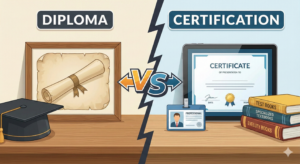
Sometimes, a simple list isn’t enough—you need the badge. Pursuing a Google Career Certificate in Data Analytics or a HubSpot Academy certification in Content Marketing provides third-party validation that you actually know your stuff. This proactive approach shows recruiters that you have a “growth mindset,” which is just as important as the skills themselves.
Why Specificity Matters: Deep Diving into Hard Skills to Put on a Resume
Many job seekers make the mistake of being too broad. For instance, putting “Social Media” on a resume is vague. Is it TikTok content creation, or is it managing a six-figure ad spend on Meta? When considering which hard skills to put on a resume, always lean toward specificity. Instead of “Marketing,” use “Conversion Rate Optimization (CRO).” Instead of “Writing,” use “Technical Documentation” or “SEO Copywriting.”
The more specific the skill, the higher the perceived value. A “Generalist” is often the first to be laid off, while the “Specialist” with a unique set of hard skills is the last to go. This is particularly true in technical fields like agronomy or engineering, where knowing a specific software like ArcGIS or AutoCAD can be the difference between a “no” and a “yes.”
FAQ: Common Questions About Hard Skills to Put on a Resume
How many hard skills to put on a resume is too many?
Quality always beats quantity. You should aim for roughly 8 to 12 highly relevant hard skills to put on a resume. If you list 30 different software programs, the recruiter might suspect you are “padding” your resume and don’t actually have a deep understanding of any of them. Tailor your list to the specific job description you are applying for every single time.
Should I include hard skills I am still learning?
Yes, but you must be transparent. If you are halfway through a coding bootcamp, list it as: “Python (Currently Pursuing – Expected Completion Oct 2026).” This shows initiative and transparency, which are qualities recruiters love. It tells them you are an active learner who is keeping up with industry trends.
Can hard skills become outdated?
Absolutely. If you are still listing “Windows XP” or “Internet Explorer” as hard skills to put on a resume, you are signaling to the employer that your skills have plateaued. Technical skills should be refreshed every 2-3 years. If you haven’t used a software in five years, consider whether it’s still relevant or if it’s just taking up valuable real estate that could be used for something more modern.
What is the best way to find the “right” hard skills for a specific job?
The job description is your cheat sheet. Look at the “Requirements” or “Preferred Qualifications” section. The keywords listed there are exactly the hard skills to put on a resume that the company’s ATS is programmed to find. Match your skills to their needs as closely as possible.
How do I list hard skills if I am changing careers?
Focus on “transferable” hard skills. For example, if you are moving from teaching to corporate training, your “Lesson Planning” skill can be translated to “Curriculum Development.” If you are moving from retail to office work, your “Inventory Management” is a valuable data-related skill.
Conclusion: Your Skills are Your Story
At the end of the day, your resume is a bridge. On one side is the person you are—with all your experiences, late nights, and hard-won victories. On the other side is the professional the company needs to solve their problems. These hard skills to put on a resume are the bricks that build that bridge.
By carefully selecting and showcasing the right technical abilities, you are doing more than just following a standard format. You are taking control of your professional narrative. You are telling the hiring manager: “I have the tools, I have the knowledge, and I am ready to deliver results immediately.”
Don’t let your talent go unnoticed because of a lack of keywords. Open your resume today, look at your skills section, and ask yourself: Does this list represent the expert I have become? If the answer is no, start your upskilling journey today.